example.com
Verify you are human by completing the action below.
example.com needs to review the security of your connection before
proceeding.

Before we can let you through to example.com, please complete the following steps:
The post Apple updates iOS to fix crypto wallet security vulnerabilities appeared first on We Greece.
]]>The security updates, which were released Tuesday, affect iOS 14.4 and iPadOS 14.4. The vulnerabilities reportedly allowed hackers to gain remote access to a target system, thereby exposing the user’s cryptocurrency wallet.
Pete Kim, Coinbase’s head engineer, warned iPhone users to update their operating system immediately.
“If you are using a mobile crypto wallet on an iOS device, be sure to update iOS as soon as possible!” Kim tweeted Tuesday. “The update includes a fix for a remote arbitrary code execution vulnerability that may have been actively exploited.”
Coinbase’s mobile wallet is the 13th most downloaded finance app on the Apple Store.
Apple’s security updates are available for iPhone 6s and later, iPad Air 2 and later, iPad Mini 4 and later and the seventh-generation iPad Touch. The company said that the vulnerabilities “may have been actively exploited” by malicious actors.
Mobile wallets are a popular way for crypto users to store and transfer their digital assets. They also make it easier to spend cryptocurrency on everyday items.
Crypto infrastructure has been a primary target for hackers over the years, but the extent of the attacks has declined considerably. As Cointelegraph reported in November 2020, crypto-related attacks declined sharply over the course of 2020.
Πηγή: https://cointelegraph.com/news/apple-updates-ios-to-fix-crypto-wallet-security-vulnerabilities
The post Apple updates iOS to fix crypto wallet security vulnerabilities appeared first on We Greece.
]]>The post The new landscape with the Register for virtual currencies and digital wallets appeared first on We Greece.
]]>Virtual currencies represent a value that is not issued by a central bank or public authority, nor is it guaranteed. It is also not necessarily linked to legally circulating currency and does not have the legal status of currency or money. On the other hand, however, it is accepted by natural or legal persons as a means of transaction and can be transferred, stored or circulated electronically.
Examples of virtual currencies are Bitcoin, LiteCoin, Ethereum, Polkadot etc. used for investment and trading.
The digital wallet is the method (eg a software application) for holding, storing and transferring virtual currencies.
The digital wallet custodian service allows you to participate in the virtual currency system and facilitates transactions in virtual currencies, stores users’ private encrypted keys, holds user account balance in virtual currencies, generally stores virtual currencies and provides transactional security.
Digital wallets can be stored online (hot storage) or offline (cold storage).
It now seeks to regulate the use of virtual currencies and digital wallets by monitoring them by the competent authorities through their providers. The purpose is to control the risk of money laundering within the financial system or within virtual currency networks by terrorist groups and illegal activities.
The Hellenic Capital Market Commission announced at the beginning of the month (January 7) that the providers of virtual and documentary currency exchange services and digital wallet custody must register by January 31, 2021 in the special register, which it keeps [(Law 4557/2018, as amended by Law 4734/2020, to incorporate into Greek legislation Directive (EU) 2018/843 (AMLD V)].
These are:
Register of exchange service providers between fictitious and documentary currencies and
Register of digital wallet custodian service providers.
What is provided for registration
The relevant Registers of the Hellenic Capital Market Commission must be registered, before their activation, the Providers that intend to provide their services in Greece or from Greece to other countries.
The Providers, which are already active in Greece, are subject to the deadline of January 31st.
The entry in the relevant Register includes:
– The application for registration, including information and documents submitted to the EC, for Providers natural and legal persons respectively
– Payment of a fee for the submission of the application and the processing of their registration in the relevant Register
– Annual contribution to cover supervision costs.
Those who do not register by this date will be subject to the sanctions of art. 46 of Law 4557/2018, as a fine, a public announcement stating the person and the nature of the violation, but also prohibitions that may reach the final prohibition of the provision of these services.
The post The new landscape with the Register for virtual currencies and digital wallets appeared first on We Greece.
]]>The post Why Nobody Can Hack a Blockchain appeared first on We Greece.
]]>A common mistake that new cryptocurrency investors make is to confuse the hacking of a blockchain with that of a digital exchange. Whereas unfortunately centralized digital exchanges get hacked more than they should, decentralized blockchain hacks are very rare, as they are hard to achieve and provide little incentive to carry out.
In this post, we look at what makes blockchains — as applied in the cryptocurrency sector — impervious to security breaches.
The blockchains behind most cryptocurrencies are peer-to-peer (P2P), open-source and public, allowing everyone with the right equipment and knowledge to peek in under the hood. This is important to foster transparency and attract buyers.
A blockchain comprises different technological mechanisms working together towards a common goal. For instance, there are consensus mechanisms such as proof of work (PoW) and proof of stake (PoS) that protect the network by mitigating cyber-attacks from hackers.
A blockchain’s decentralized nature means that its network is distributed across multiple computers known as nodes. This eliminates a single point of failure. In other words, there is no way to “cut the head off the snake” — because there isn’t any head.
The architecture of a blockchain determines how the nodes cooperate in verifying a transaction before being committed to the protocol. In the case of Bitcoin and other PoW systems like Bitcoin Cash, a minimum of 51% of the nodes must agree to the transaction before commitment.
Each transaction is called a block, and the interconnection of several transactions becomes a blockchain. Notably, a block has cryptographic elements that make it unique. A network’s hashing algorithm determines the details. For example, the Bitcoin blockchain uses the double SHA-256 hash function, which takes transaction data and hashes/compresses it into a 256-bit hash.

By making it hard to reverse the hashed value, a transaction becomes inflexible. Each block in a chain contains a specific set of data from the previous block. Therefore, even if a malicious actor reverse-engineers the hash, the resultant block would be out of sync with the rest of the blocks since it will have a different hash output, thus causing the system to reject it.
The longer a blockchain exists and the more new users it attracts, the less likely it is to suffer a 51% attack due to its growing hash power.
This becomes prohibitively expensive at a certain point. Therefore, considering the size of established blockchains like Ethereum and Bitcoin, such a scenario is nearly impossible.
Another reason why it’s even harder to hack a blockchain is that in case the block being re-hashed is at the middle of the chain, the attacker would have to re-hash previous blocks to align their historical stamp with the new block.
For Bitcoin, this is only possible with the next generation of quantum computing, which currently doesn’t exist. And even when it does, who’s to say there won’t be a blockchain-based quantum defense mechanism to mitigate quantum attacks?
In PoS-based systems, stakes determine the strength of the network. To elaborate, this means those users who have delegated or actively locked their native blockchain assets to participate in transaction processing and finding new blocks. On such systems, an attack occurs when a hacker controls a majority of the stake.
This is possible when the hacker accumulates over 51% of all coins in circulation. For reputable networks like the evolving Ethereum 2.0 platform, this is all but impossible. Imagine trying to find the funds to buy up 51% of ETH’s current $68 billion market cap!
You can’t orchestrate a stealth 51% attack without creating too much scarcity, as your purchasing of coins will make the available ones skyrocket in value to incredibly high levels. Conversely, when the blockchain participants find out you own a majority of the coins, they will likely sell their holdings, thereby crashing the market with excess supply. So you’ll end up buying high, and selling low!
Good question. It boils down to the strength of a network. Notable 51% attack victims include Ethereum Classic, Bitcoin Gold, Electroneum, and most recently Grin. The Ethereum Classic network uses the PoW consensus algorithm. Although Bitcoin uses the same algorithm, ETC has a much lower number of nodes and miners securing the system. Thus, it has lesser processing power, making it easier for an attacker to take control.
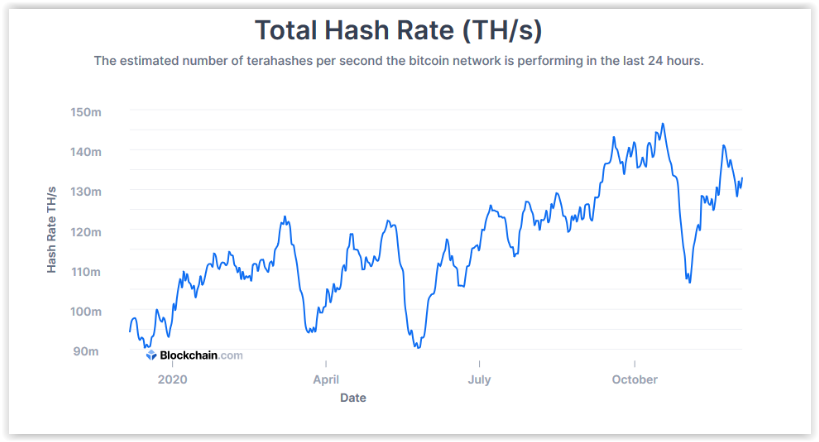
ETC has a hash rate of 1.6 tera hash per second, while Bitcoin’s stands at 117.9 exa hashes per second.
So far, nobody has single-handedly hacked a blockchain. Instead, it’s usually a group of malicious actors or the core dev team that collaborate to breach a blockchain’s security. However, as blockchain platforms get stronger through an increase of nodes or stakers, the possibility of hacking a decentralized network is increasingly moving towards zero.
In addition, newer blockchain systems use academically-proven techniques that would need highly-specialized quantum computers to hack.
To sum it all up — if you ever hear someone saying that a “blockchain was hacked!” you now have the tools to (politely) correct them and send them on their way.
The post Why Nobody Can Hack a Blockchain appeared first on We Greece.
]]>The post Blockchain and Digital Assets Adoption Continue to Grow Despite COVID-19 Pandemic appeared first on We Greece.
]]>The report has revealed that not only is growth possible for blockchain and digital assets initiatives, but that familiarity with them has increased as well. Across five global regions (North America, Europe, Middle East and Africa, Latin America and Asia Pacific) familiarity with blockchain and cryptocurrency ranges from 82% to 94%
The report has also found the blockchain adoption and positive sentiment is growing, with 67% of respondents claiming that cryptocurrency is net reliable, and over one-third using blockchain payments. IT was also found that nearly 4 in 5 (79%) of industry innovators reported growth in 2020 despite the economic pressures of the Covid-19 pandemic.
Other key findings include:
The post Blockchain and Digital Assets Adoption Continue to Grow Despite COVID-19 Pandemic appeared first on We Greece.
]]>The post More Use of Blockchain Technology Could Bring Benefits to Africa appeared first on We Greece.
]]>The World Bank projects that the value of remittances to Sub-Saharan Africa will decline by around 9% in 2020 due to the global recession caused by the pandemic. In a region where many families depend on remittances from members abroad, the fall is likely to result in an increase in food insecurity and poverty.
Furthermore, the World Bank has found that the cost of sending $200 worth of remittances to Sub-Saharan Africa is around 8.5% – among the most expensive in the world. However, it also identifies that developing digital technology is an area that can help alleviate the cost of remittances. Reducing the cost would help boost the value of payments from abroad, helping offset some of the negative economic impacts of the COVID-19 crisis.
Given the low cost of sending payments via a blockchain, it seems likely that the technology could have a significant role to play in reducing the cost of remittances to Sub-Saharan Africa. It’s one area that blockchain development firm Jelurida has identified where blockchain could make a significant difference in the lives of people living in Africa.
Through its African branch, Jelurida Africa DLT, the company works with local enterprises to help them implement its blockchain-based solutions into their businesses. Jelurida operates the Ardor multichain platform, which has an innovative parent and child chain structure. Anyone can use Ardor to set up their own child chain for any use case.
Bitswift is one such example. It has been operating for the last six years and made the decision to move its blockchain architecture onto Ardor in 2017. Bitswift is a combination of companies and an online community that works together to promote healthy digital lifestyles. Its Bitswift.cash branch allows anyone to participate in the blockchain-based token economy, providing a low-cost means for any two parties to transact value. It’s designed to appeal to even non-technical users who want to reap the benefits of token markets, making it a workable solution to the challenge of high remittance costs.
Blockchain also offers significant potential in other areas, beyond pure payments, that could help innovators looking to solve challenges in African nations. For example, many African countries remain heavily dependent on fossil fuels, which may be hampering investment in renewable energy sources, according to the United Nations. Nigeria alone subsidizes the production of fossil fuels by up to $2.5 billion each year.
Therefore, it’s essential to remove barriers to more sustainable means of energy production. Through its Swiss entity, Jelurida has been working with a project collaborating with the Austrian government and aimed at recycling waste heat energy. The project is called “Hot City,” and it uses gamification to crowdsource waste heat that can be recycled back into the energy grid. Citizens can be rewarded for their efforts in identifying these sources using blockchain-based tokens, which are secured using the Ardor platform. Although it’s currently operating in Vienna, such an initiative could be even more valuable in a city like Lagos, which has around seven times the population. It could reduce the dependence on fossil fuels, helping to save costs, and also combat the effects of climate change.
Jelurida Africa supports the development of a new generation of blockchain innovators via the Africa Blockchain Institute. The institute offers several industry-leading programs helping would-be developers establish their blockchain credentials.
Jelurida has also recently been a key participant in the Africa Blockchain Developers Call series, showcasing various applications built on the Ardor platform, including a Smart Voting Bot application and GiveSafely, a secure system for charitable donations.
In a continent as vast and diverse as Africa, there is no “one-size-fits-all” solution to any issue. However, blockchain technology is versatile enough to address many of the specific challenges faced by African countries. Jelurida Africa is putting the focus on education and innovation to help businesses and entrepreneurs to unlock the true benefits of blockchain.
Source: https://coingape.com/more-use-of-blockchain-technology-could-bring-benefits-to-africa/
The post More Use of Blockchain Technology Could Bring Benefits to Africa appeared first on We Greece.
]]>The post Why the Gaming Industry Will Embrace Blockchain Faster Than You Think appeared first on We Greece.
]]>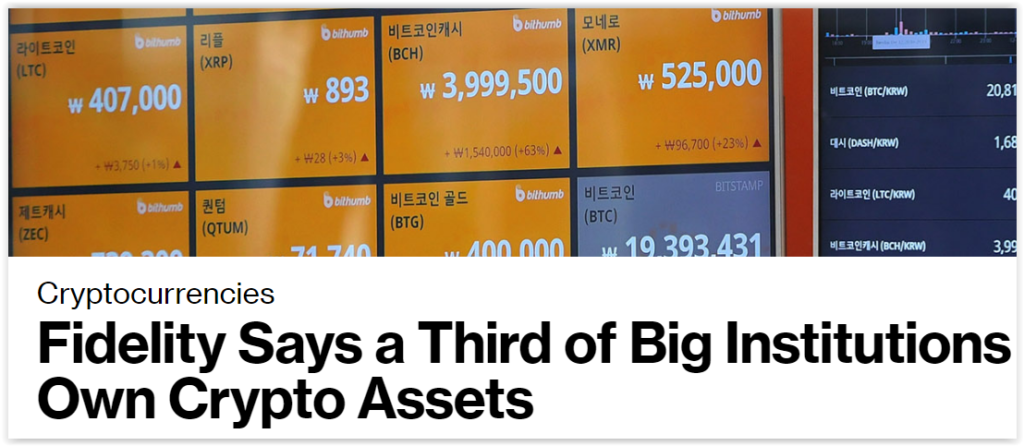
But there’s another, less-mentioned sector that is currently testing the waters with blockchain. That’s the $160-billion gaming industry, and it’s ripe for adoption. Many have debated over which niche will win the proverbial race to propel blockchain into the mainstream, including folks in finance championing crypto-based assets, and others in gaming firmly convinced their space will pave the way first. As is so often the case, the truth lies somewhere in the middle.
What’s for certain is gamers now make up almost a third of the world’s population. If blockchain does become a central component of mainstream gaming, they could have an influence on the direction of blockchain. That process is gaining momentum, though there is still work to be done.
Out of all transactions performed on smart-contract platforms, including trades, deposits, and withdrawals on decentralized exchanges, gaming-based actions make up 30 percent of all activity, according to a DappRadar report. Most of that today involves blockchain-specific games, rather than traditional games. While blockchain’s infrastructure provides gamers a huge set of new benefits and rewards, the current availability and diversity of games remains at the developmental stage, plateauing blockchain assimilation. How will blockchain make its way further into the territory of traditional gaming?
For a real boom in blockchain games, developers will have to hasten the creation of charismatic games in order to provide genuine appeal outside of blockchain incentives. They will also need to combine rewards with a higher-end gaming experience—this is the real added value blockchain offers. Rewards exist in non-blockchain games, yes. But blockchain ups the ante, offering gamers a secure and efficient way of earning something that’s truly valuable for the time they put into gaming.
These rewards come in the form of accruing assets, such as weapons or in-game currencies. Non-blockchain rewards programs, such as Steam Points and Google Play Points, do let gamers earn rewards for “playing.” Unlike blockchain-based token rewards, however, these rewards can only be used within their respective ecosystems. Blockchain empowers users to spend their assets across ecosystems, expanding their possibilities and paving way for an interconnected framework of gaming.
If it is to appeal to average players, blockchain games will have to be competitive on many levels, one of them being familiarity. While it’s true many brand new games sell super well and create cult fandoms of their own, there’s something to be said about familiarity often boosting the chances of a game to succeed. Just like in other industries, the name-recognition factor goes a long way. There’s a reason legacy Triple A games like Pokemon continue to sell year after year.
And we’re not just talking about the familiarity of the games themselves—familiarity with key aspects of the gaming experience is important. While traditional gamers might be unaccustomed to distributed ledger technology, they are very familiar with the concept of digital assets and rewards. So gamers confronted with the option of earning and accruing digital assets by playing games won’t see the idea of earning tokens on the blockchain as such a big leap from what they are used to. All that’s left is to show them the advantages such tokens offer.

Imagine if Fortnite, the most profitable video game of all time bringing in over a billion dollars of revenue in its first ten months alone, was not a closed-loop system but an open, democratic marketplace. Players could share in the value generated within the Fortnite game economy and perhaps even sustain an ongoing revenue stream, all the while participating in the governance and decision-making as the game evolves.
Ownership matters
Empowering gamers with true ownership and control over their assets remains one of blockchain’s greatest advantages. The issue has come to the fore, with high-profile incidents in which highly centralized institutions violated this dynamic. Video game developer Blizzard, for example, banned Ng “Blitzchung” Wai Chung, a player of the virtual card game Hearthstone, for voicing support for Hong Kong protesters during a competition live stream. Since then, Blizzard also banned three college students and temporarily suspended multiple people in a Twitch chat for also expressing support for the protests.
EA Sports also blocked Origin for Myanmar residents, after which Trivial_sublime reacted in anger at the block, leaving him unable to play the games he had bought on Origin. He used the situation to declare: “why you shouldn’t take digital distribution for granted.”
“None of us has been offered a refund,” he wrote, adding, “not even a ‘sorry, all your games are gone.’”
Blockchain continues to promise the moon and shoot for the stars in all spheres, and gaming is no exception. It’s absolutely true that it could change the face of the gaming industry if it ever saw widespread adoption by the EAs and Ubisofts of the world, but that won’t happen until we further bridge the gap between blockchain rewards and gameplay appeal. If recent developments in blockchain expanding into mainstream financial and payment circles are any indication of what’s to come for gaming, the process will happen faster than some might think.
The post Why the Gaming Industry Will Embrace Blockchain Faster Than You Think appeared first on We Greece.
]]>The post Nigeria targets $10 billion from Blockchain technology by 2030 appeared first on We Greece.
]]>He said: “Looking at our youthful population, which is mainly digitally native and our strategic position in Africa, we are looking at how we can get at least around $6-10 billion from this by the Year 2030, and this is doable looking at our strategic and huge payment and financial services sector. Nigeria is already one of the hottest places when it comes to tapping from this. We are coming up with a strategy that will help Nigeria to capture value from the financial services from the land administration, from education, and from healthcare because Blockchain is going to play a key role in terms of breaking and tracing products and services,” he said.
He noted that a recent publication by PwC showed that in the next 10 years blockchain is going to contribute $1.76trillion to the global gross domestic product (GDP). “Therefore, we want Nigeria to be strategically placed to capture value for this economic potential of Blockchain and that is why we are doing what we do today, to get all the stakeholders in one room, brainstorm and come up with a strategy, Nigeria benefit from the technology.”
In terms of mitigating the risks involved in adopting Blockchain, he said: “What we are looking at is to identify a set of choices, strategy is about your choices, the dos and don’t. At the end of the strategy, we are going to identify the key risks and the mitigant, how can we mitigate those risks so that we can know our dos and don’ts and how we can capture values from the Blockchain.”

Speaking also, a representative of the Central Bank of Nigeria (CBN), Fadele Adeolu, pledged the apex bank’s commitment to the initiative.
“CBN is fully committed to the initiative that will drive the development of the economy. I pray that the programme access will yield desirable results.”
A Blockchain expert, Abdulsalam Umar, in his presentation titled, “An Overview of the National Blockchain Adoption Strategy,” said Blockchain will reduce cost and improve security in the country, because of its conducive environment.”
Source: https://guardian.ng/business-services/nigeria-targets-10-billion-from-blockchain-technology-by-2030/
The post Nigeria targets $10 billion from Blockchain technology by 2030 appeared first on We Greece.
]]>The post Banks are gradually adopting the innovative Blockchain technology appeared first on We Greece.
]]>The blockchain was originally created for Bitcoin transactions.
It is a different database format that is maintained on many computers.
Banks have so far chosen to follow some of the principles of the blockchain, adapting the technology to different uses of digital currencies.
In Italy, much of the country’s banking sector uses Spunta, a technology-based blockchain network from R3 based in New York.
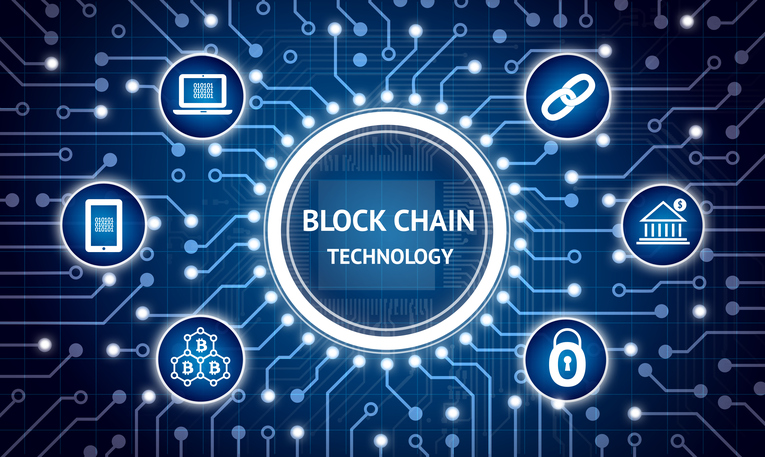
“We’ve been talking about the prospects of blockchain for a long time and it’s great to finally see it in action.
It is a beginning. We would like to adopt it in other European countries and then globally.
“The infrastructure it has lays the groundwork for the development of other technologies that can really have an impact,” R3 founder and CEO David Rutter told the channel.
For some large banks, the focus is increasingly on understanding how they can actually make a profit from the blockchain.
JPMorgan Chase, for example, recently unveiled its internal digital currency – the JPM Coin.
The pandemic could play a key role in promoting commercially viable blockchain products by banks, according to Lex Sokolin, co-head of blockchain company ConsenSys.
Sokolin added that banks and other financial institutions are also less reluctant to experiment with digital currencies than before.
The People’s Bank of China is already testing a digital version of the yuan, while other central banks have devised a framework for how these digital currencies might work in practice.
“Our view is that this adoption and transformation will be gradual in most countries, but drastic in some individual areas. Payment systems do not tend to replace each other completely, but rather are being built more and more,” he said.
Mr Rutter, for his part, noted that more commercial banks in Europe could use blockchain technology to improve their profitability.
The post Banks are gradually adopting the innovative Blockchain technology appeared first on We Greece.
]]>The post Bayern Munich joins the blockchain-based fantasy soccer trend appeared first on We Greece.
]]>The Ethereum blockchain-based fantasy soccer game Sorare, which Bayern joined this week, already counts over 100 participant clubs, including high-profile names such as Paris Saint-German, Juventus, PSG, and Atletico Madrid.
FC Bayern Munich is itself no stranger to collaborations with blockchain projects, having partnered last fall with Stryking Entertainment to produce digital collectibles of its players. These cards are both collectible and playable as part of a fantasy-league style challenge.
In announcing its Sorare deal to fans, FC Bayern Munich noted that the top 20 leagues in the world are now available on the gaming platform, which has become truly global.
Sorare works as a five-a-side soccer game. New players pick an initial squad of 10 blockchain-based player cards from which they create their tournament team.
As reported, Sorare also offers players the chance to buy and trade limited edition cards, whose higher score and value is determined by players’ real-life performance in soccer league tables and their rarity as digital collectibles.
According to Nonfungible, a ranking site for blockchain games and issuers of collectible, non-fungible tokens, Sorare is inching up the league tables and has been gaining popularity with the global gaming community.
As of press time, the platform is ranked third, with a weekly trading volume of roughly $243,000. However, in terms of all-time-sales, Sorare significantly trails behind Axie Infinity, which reports roughly triple the sales of the fantasy soccer market.
Sorare has recently launched in the United States, where the platform hopes to attract some of the 60 million American fantasy sports players.
Source: https://cointelegraph.com/news/bayern-munich-taps-the-trend-for-blockchain-based-fantasy-soccer
The post Bayern Munich joins the blockchain-based fantasy soccer trend appeared first on We Greece.
]]>The post Tesla gets progressive with Bitcoin ATMs at factories, claims report appeared first on We Greece.
]]>Tesla, being as forward-thinking as ever, now has Bitcoin ATMs at the Fremont Factory and Gigafactory Nevada.
One of the Bitcoin ATMs was originally spotted by Twitter user Will Reeves. LibertyX, the company responsible for the Bitcoin ATMs, reached out to Finbold and confirmed Reeves’ sighting in an official statement.
“The Tesla locations have been live since August. The ATM is currently only accessible for employees,” LibertyX told Finbold.
The Bitcoin ATM company also stated that it did not install a new kiosk at Gigafactory Nevada. It simply added Bitcoin-selling features via software to three ATMs in the facility that were already installed.
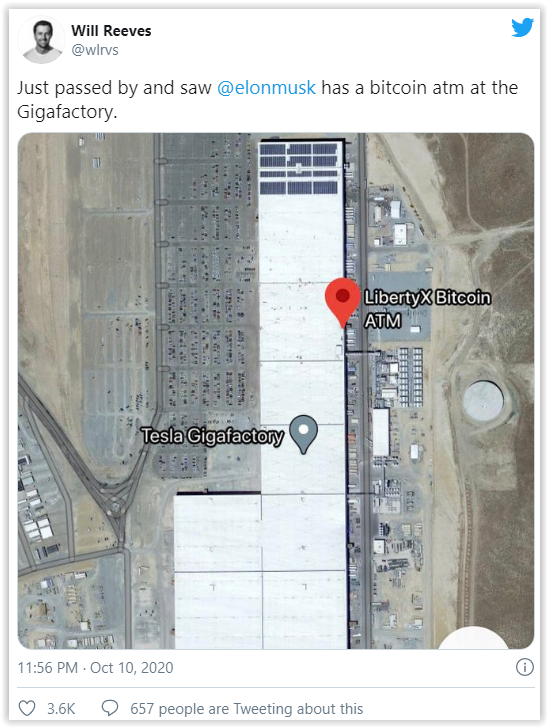
A quick search through LibertyX’s website revealed that Tesla also has a Bitcoin ATM in the Fremont Factory for employees to use.
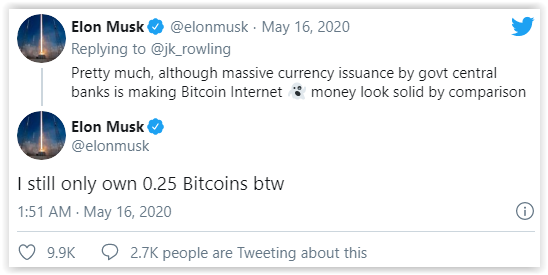
Avid Tesla supporters know the intriguing relationship Elon Musk has with cryptocurrencies and crypto scammers.
Just this past June, crypto scammers used Elon Musk and SpaceX to steal up to $150,000 from YouTube viewers. The scammers convinced viewers to send Bitcoin to several YouTube channels by hacking legitimate accounts and rebranding them to fit their purpose.
They used archived footage of Elon Musk to broadcast a live event and convince viewers the channels were authentic. Other scammers went a step further and copied Elon Musk’s Twitter account, confusing his followers.

Despite crypto scammers using his identity and his companies’ brands for their schemes, Elon Musk remains a supporter of cryptocurrencies and an influential figure in the crypto industry, according to Cointelegraph.
He has applauded Bitcoin, in particular, for having a “brilliant” structure. The installation of two Bitcoin ATMs in two Tesla Gigafactories suggests that Musk’s stance on cryptocurrencies still holds.
The Tesla CEO might not stop at installing Bitcoin ATMs in just two Gigafactories either. LibertyX stated that it has more Bitcoin ATMs ready for installation.
“LibertyX has partnered with the two largest ATM manufacturers (Genmega and Hyosung) to offer bitcoin software preinstalled on traditional ATMs. Once operators activate the feature, consumers can start buying bitcoin with their debit card from ATMs nationwide. We have 5,000 ATMs already live and plan to roll it out at over 100,000 ATMs over the next few years,” the company explained further.
LibertyX did not state that more of its Bitcoin ATMs would be installed at Tesla’s factories. However, it is a possibility, especially if the Bitcoin ATMs in Nevada and Fremont are popular with the employees.
If the Bitcoin ATMs do become a hit, Elon Musk may start thinking of installing Dogecoin ATMs as well. After all, Musk was briefly the CEO of Dogecoin, and the cryptocurrency’s meme origins fit perfectly with his online tendencies.
Source: https://www.teslarati.com/tesla-elon-musk-bitcoin-atm/
The post Tesla gets progressive with Bitcoin ATMs at factories, claims report appeared first on We Greece.
]]>